NASA’s Kepler telescope delivers new discovery
Posted 2 Apr, 2022
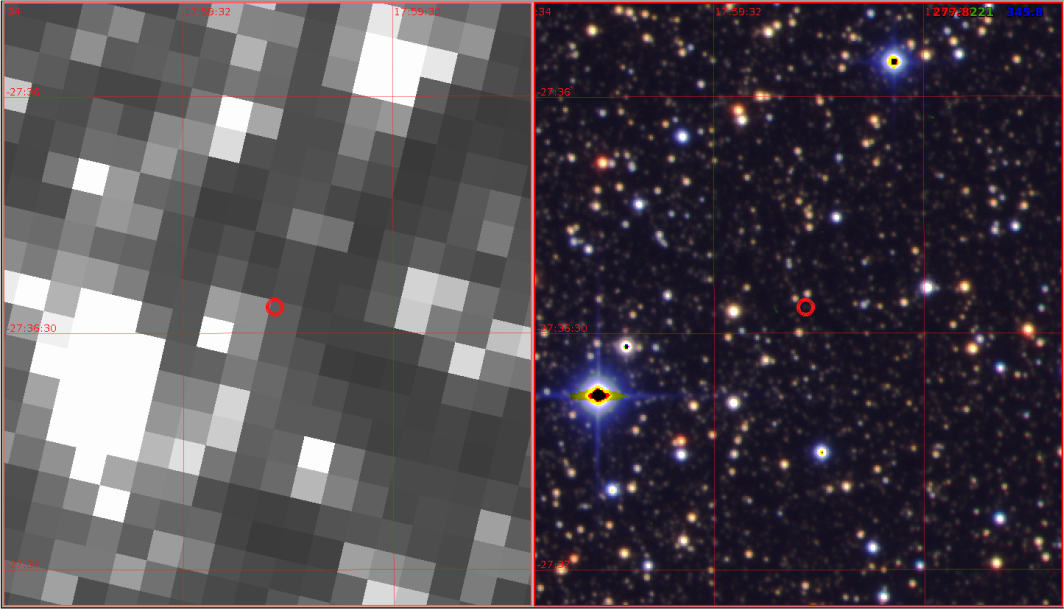
A new study by an international team of astrophysicists, led by the Jodrell Bank Centre for Astrophysics has presented the amazing new discovery of a near-identical twin of Jupiter orbiting a star at a colossal distance of 17,000 light years from Earth.
The exoplanet, K2-2016-BLG-0005Lb, is almost identical to Jupiter in terms of its mass and its distance from its sun was discovered using data obtained in 2016 by NASA’s Kepler space telescope. The exoplanetary system is twice as distant as any seen previously by Kepler, which found over 2,700 confirmed planets before ceasing operations in 2018.
The system was found using gravitational microlensing, a prediction of Einstein’s Theory of Relativity, and is the first planet to be discovered from space in this way. The study has been submitted to the journal Monthly Notices of the Royal Astronomical Society and has been made available as a preprint on ArXiv.org.
PhD student, David Specht from The University of Manchester is the lead author on the new research. To find an exoplanet using the microlensing effect the team searched through Kepler data collected between April and July 2016 when it regularly monitored millions of stars close to the centre of the Galaxy. The aim was to look for evidence of an exoplanet and its host star temporarily bending and magnifying the light from a background star as it passes by the line of sight.
To see the effect at all requires almost perfect alignment between the foreground planetary system and a background star. The chance that a background star is affected this way by a planet is tens to hundreds of millions to one against. But there are hundreds of millions of stars towards the centre of our Galaxy. So Kepler just sat and watched them for three months.
Dr Eamonn Kerins, Principal Investigator for the Science and Technology Facilities Council (STFC) grant that funded the work.
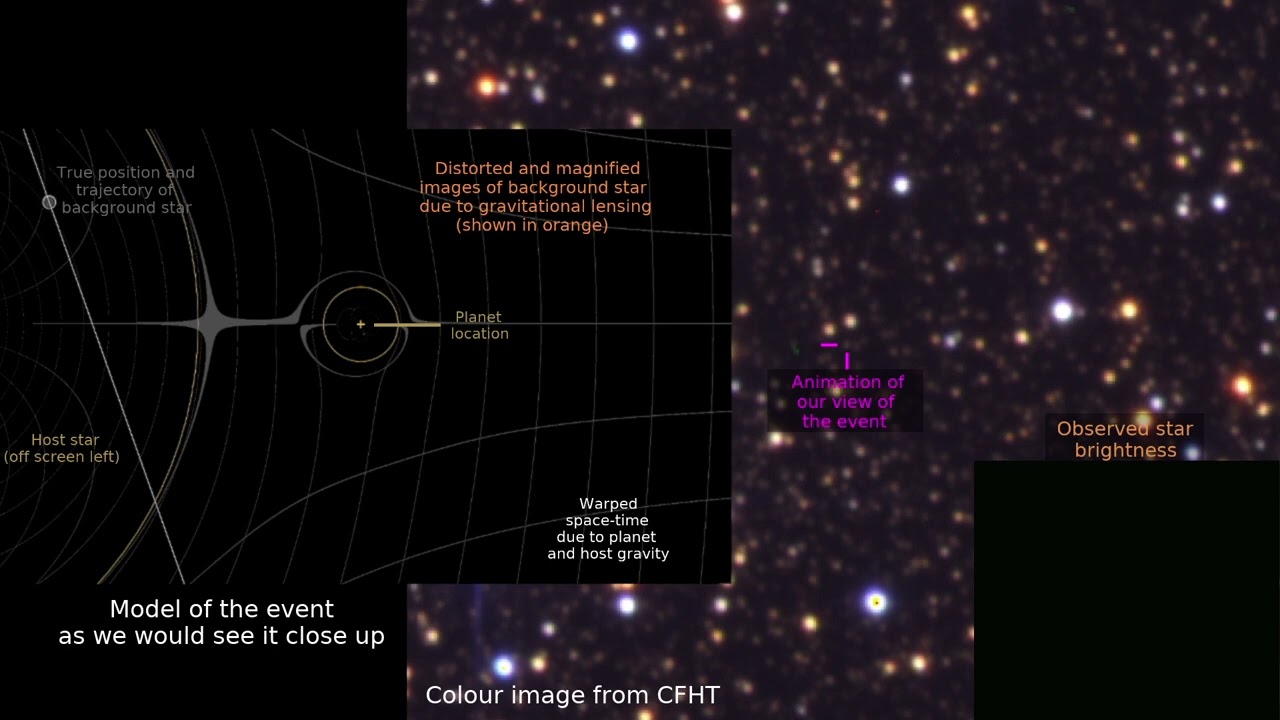
Following the development of specialised analysis methods, candidate signals were finally uncovered last year using a new search algorithm presented in a study led by Dr Iain McDonald, at the time an STFC-funded postdoctoral researcher, working with Dr Kerins. Among five new candidate microlensing signals uncovered in that analysis one showed clear indications of an anomaly consistent with the presence of an orbiting exoplanet.
Five international ground-based surveys also looked at the same area of sky at the same time as Kepler. At a distance of around 135 million km from Earth, Kepler saw the anomaly slightly earlier, and for longer, than the teams observing from Earth. The new study exhaustively models the combined datasets showing, conclusively, that the signal is caused by a distant exoplanet.
Dr Eamonn Kerins adds:
The difference in vantage point between Kepler and observers here on Earth allowed us to triangulate where along our sight line the planetary system is located.
Kepler was also able to observe uninterrupted by weather or daylight, allowing us to determine precisely the mass of the exoplanet and its orbital distance from its host star. It is basically Jupiter’s identical twin in terms of its mass and its position from its Sun, which is about 60% of the mass of our own Sun.
Later this decade NASA will launch the Nancy Grace Roman Space telescope. Roman will find potentially thousands of distant planets using the microlensing method. The European Space Agency’s Euclid mission, due to launch next year, could also undertake a microlensing exoplanet search as an additional science activity.
More from Jodrell Bank
How curious...

Jodrell Bank welcomes HRH The Princess Royal in celebration of UNESCO World Heritage status
Her Royal Highness The Princess Royal visited us in January to mark the occasion of Jodrell Bank Observatory being awarded UNESCO World Heritage Status in 2019.
Cosmic Threads Community Quilt
To mark 80 years of Jodrell Bank, we invited the public to join us in a celebratory project, Cosmic Threads, a community quilt inspired by our heritage and discoveries.
Top tips for our new ticketing system
In January 2026, Jodrell Bank launched a brand-new online booking system designed to make launching your visit easier than ever. These quick FAQs will help you get mission-ready!
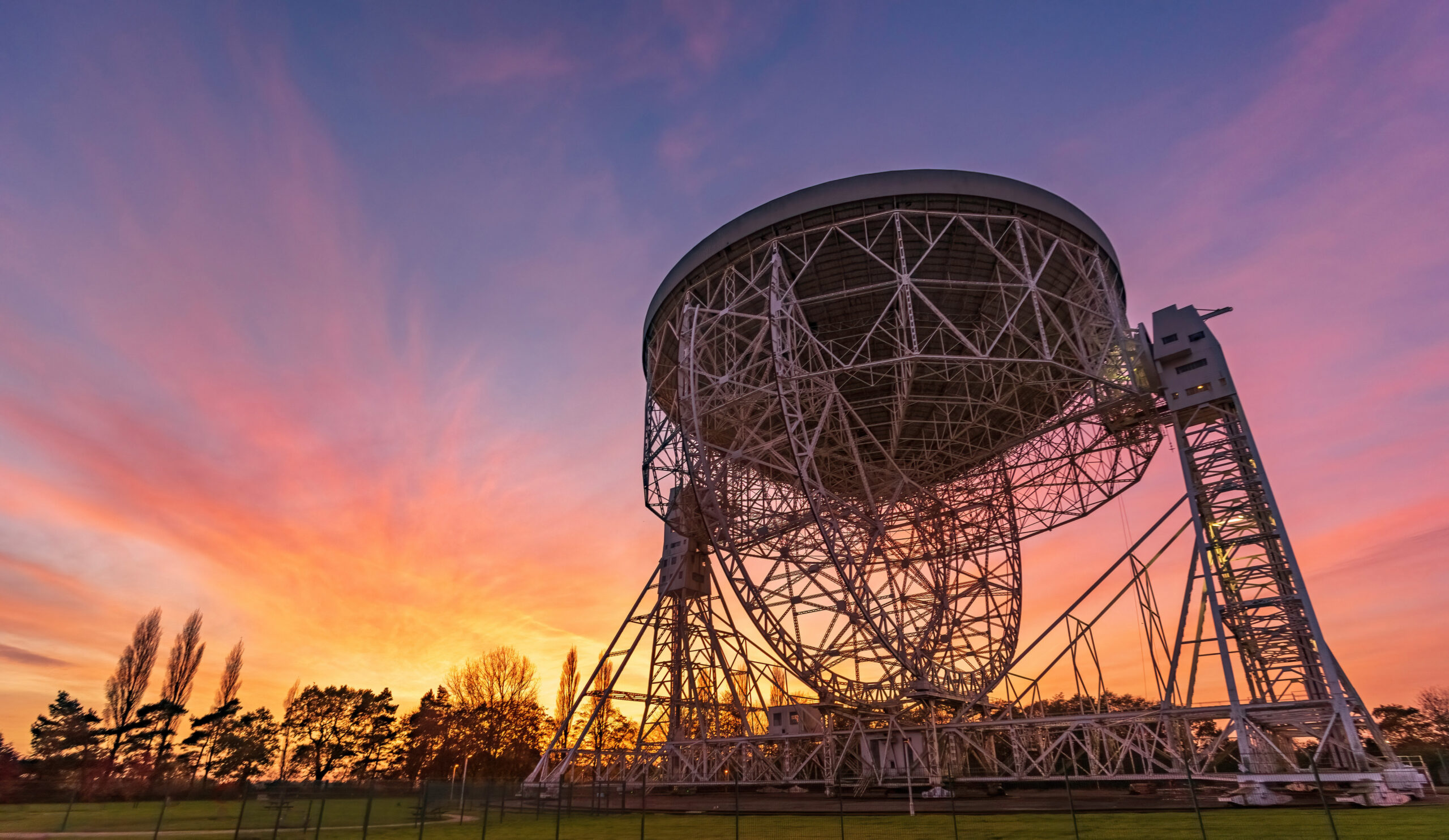
Online Tickets Update: Monday 30 March
Please note that we are making updates to our ticketing system on Monday 30 March, meaning that online ticket purchasing will be temporarily unavailable on this day.

Professor Tim O’Brien Appointed JBCE Director
The University of Manchester has appointed Professor Tim O'Brien as the new Director of the Jodrell Bank Centre for Engagement.
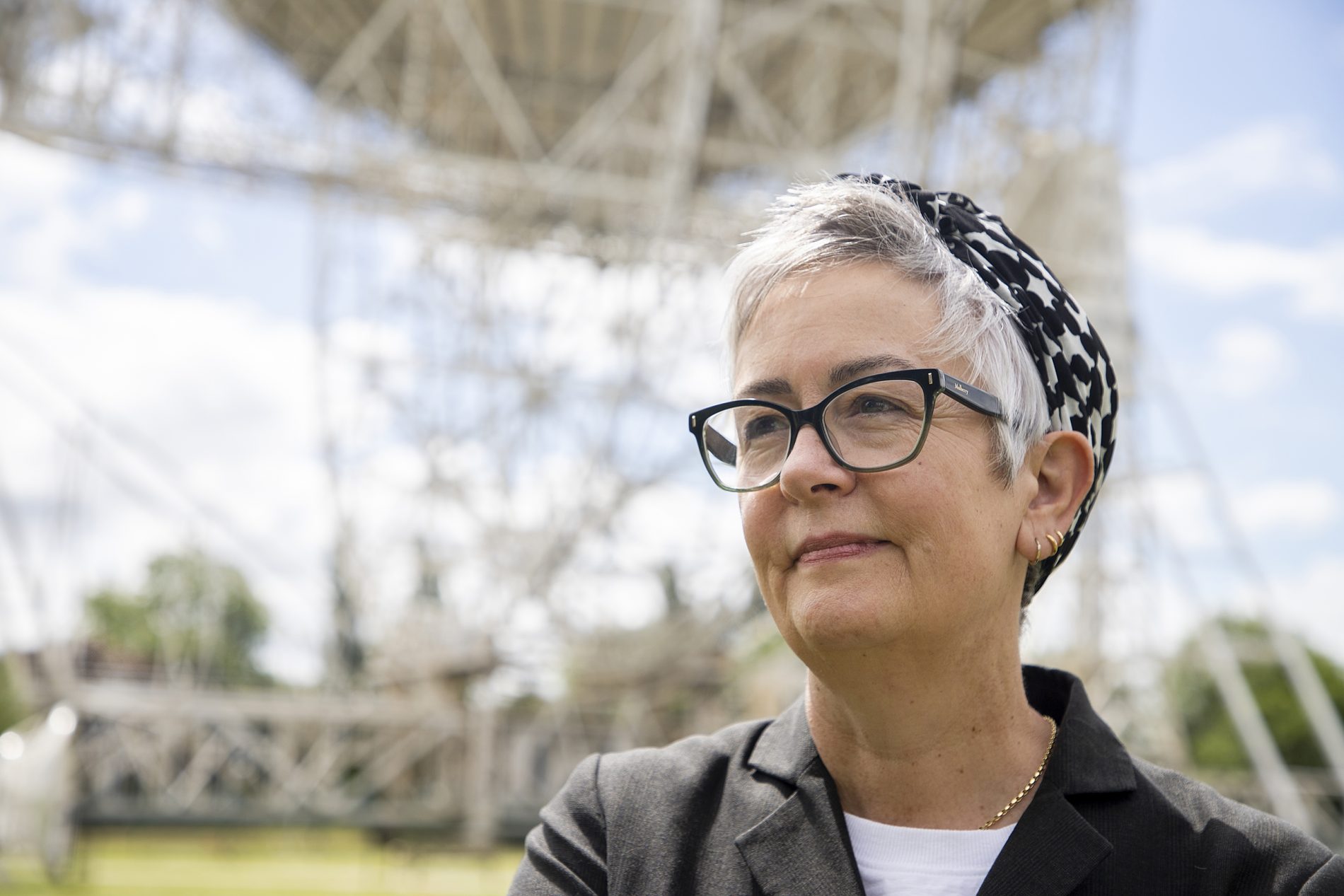
Professor Teresa Anderson Embarks on New Chapter
As of Friday, 12 September 2025, Professor Teresa Anderson MBE will be stepping down as Director of the Jodrell Bank Centre for Engagement and transitioning into a new advisory role.
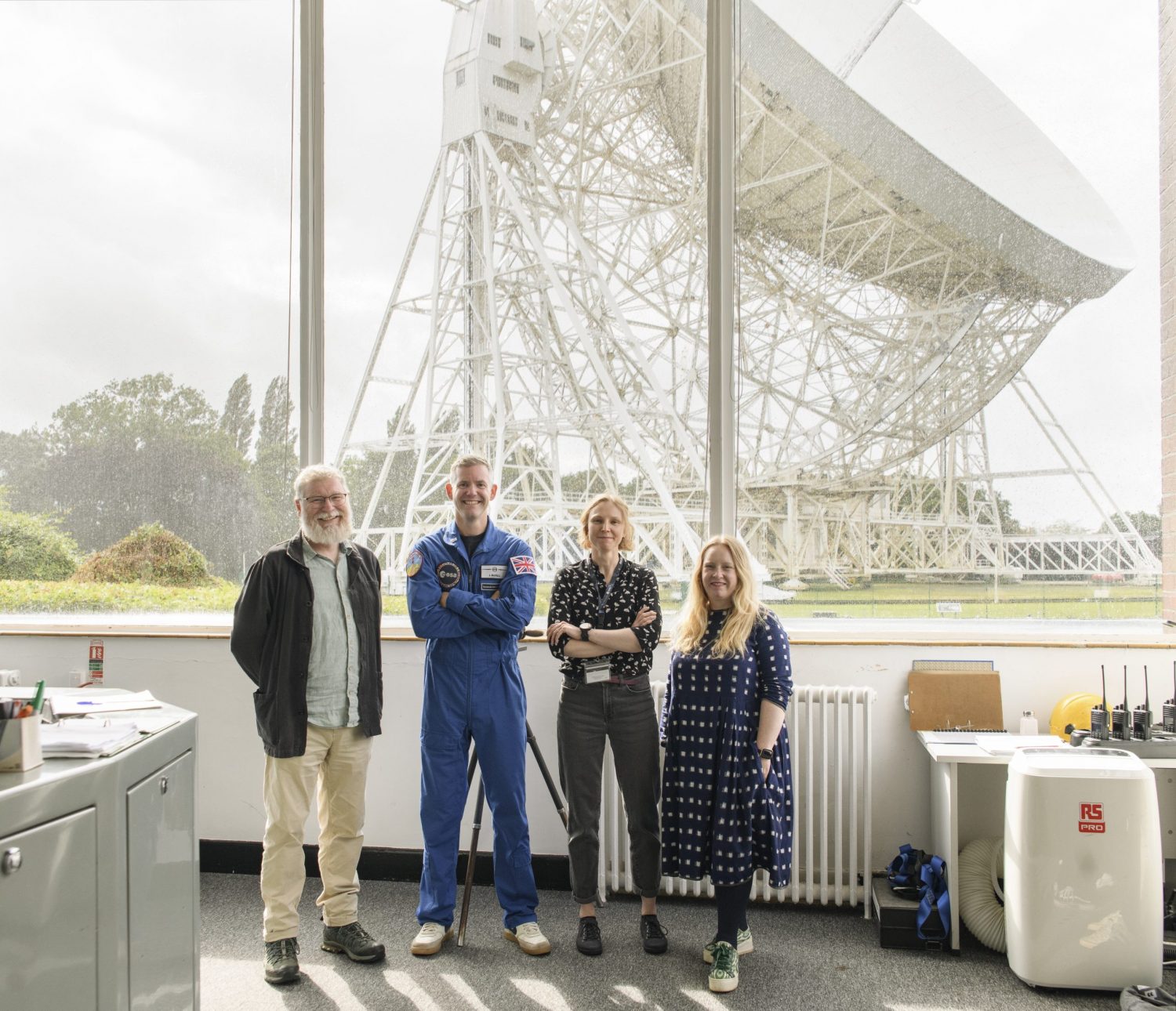
Astronaut reserve John McFall visits Jodrell Bank
On Tuesday 15 July, Jodrell Bank was thrilled to welcome astronaut reserve John McFall for an inspiring day of school sessions, talks, and a behind-the-scenes tour of the Lovell Telescope...